
Month: October 2024

Coloradans are being asked to ban mountain lion hunting and the hunting and trapping of bobcats and the endangered lynx should the animal ever get delisted.

A “no” vote on Proposition 127 will allow the hunting and trapping to continue under the careful regulation and scientific control of the Colorado Parks and Wildlife.

The Denver Post editorial board has long supported the wildlife officials at CPW in their pursuit of scientifically managed populations and supporting hunting as both recreation, food sources and a tool for population control.

The group that has proposed Proposition 127 – known as CATS – has focused its campaign on making the case that trophy hunting or sport hunting is inherently unethical and should be banned in a state known for its hunting recreation opportunities. For now, the target is big cats, but we fear what may be targeted next. Bear hunting?

No one is hunting moose primarily for the meat, and while fish often survive being caught and released, sometimes the stress or injury is too much and they die. Hunting and fishing, even when the primary motivation is not procuring meat, is not necessarily unethical.

While most Coloradans would not participate in a mountain lion hunt, or feel comfortable killing a bobcat that had been caught in a live trap, we do not find those practices to be beyond the pale. Like all outdoor recreation, it has an impact on wildlife, but CPW’s job is to carefully regulate and manage that balance between hunting and healthy ecosystems and between fishing in Colorado’s rivers and streams and flourishing trout populations.

Colorado’s mountain lion populations appear to be thriving. Bobcats are not listed in short supply, although population estimates are hard to do on the elusive animals, and lynx are already an endangered species, and hunting and trapping of the animal is not permitted.

Some shocking revelations have come from the CATS campaign, however. All is not lost just because voters might reject a complete hunting ban in a state known for its recreational hunting.

First, mountain lion hunters are killing too many female lions. About half of the 500 lions killed last year were females, which can endanger the lion population and also inadvertently lead to the death of nursing kittens if signs are missed or ignored by hunters. As it does for deer and elk, CPW should start limiting how many licenses are issued for female lions every year.

Second, there need to be annual limits put on fur trapping for bobcats. The tags are currently unlimited, meaning a hunter receiving an over-the-counter furbearer license can kill as many bobcats as they can using hunting and trapping. We don’t think that’s reasonable and could lead to overhunting. A per-license limit should be applied to the license for all furbearing animals — badger, fox, mink, muskrat, opossum, pine marten, raccoon, ring-tailed cat, skunk, weasel.

But again, those two concerns don’t support a full ban of our Colorado hunting traditions.

Finally, we do worry that the current method of hunting may not give mountain lions a fair chance to escape the hunters. Dogs pick up on a lion’s scent and pursue them for miles before treeing the animal and alerting the hunters with their barks. Today, however, hunters do not have to keep up with their dogs on foot. Instead, they use GPS tracking collars to find the treed cat and shoot it from the limbs of the tree. No matter how you feel about that hunting practice, however, that is not what this ballot measure is about. Proposition 127 is not a carefully worded regulation of hunting practices that ensures the critical principles of “fair chase.” It is a complete ban that would open up a slippery slope for all hunting across Colorado.

Voters in this state have long embraced and prioritized outdoor recreation — even if it’s a sport they don’t personally participate in. Hunting big cats is no different and we hope voters in cities and towns, on the plains and in the mountains will say “no” to Proposition 127.

Sign up for Sound Off to get a weekly roundup of our columns, editorials and more.

To send a letter to the editor about this article, submit online or check out our guidelines for how to submit by email or mail.


Angry messages started rolling into the Colorado Supreme Court in December after a majority of judges ruled that President Donald Trump was not eligible to appear on the Colorado primary ballot because he had “engaged in” insurrection. Soon the FBI was investigating threats of violence because some Trump supporters had taken their legal disagreement with the court too far.

Now, Colorado’s Supreme Court Chief Justice Monica M. Márquez is being targeted again, this time by groups urging Colorado voters not to retain her on the bench in November’s election. Márquez, who grew up in Grand Junction and was appointed by Gov. Bill Ritter to the Supreme Court in 2010, is the only Supreme Court judge on the ballot this fall who joined the majority opinion in Anderson v. Griswold.

Coloradans should vote to retain Márquez and send a message to those wielding her retention as a political cudgel that far-right extremists cannot bully Colorado justices.

The four justices were sound in their finding last year that Trump had orchestrated a vast insurrection attempt that culminated with the violent Jan. 6 attempt to prevent Congress from seating Joe Biden as president.

“We are mindful of the magnitude and weight of the questions now before us,” wrote the four-justice majority late last year. “We are likewise mindful of our solemn duty to apply the law, without fear or favor, and without being swayed by public reaction to the decisions that the law mandates we reach.”

In other words, the justices stood strong against threats and angry messages flooding into the courts. The majority applied the clear language of Section 3 of the 14th Amendment, a guarantee that Americans not be governed by someone who had betrayed the cornerstone of American democracy by treason or insurrection. The facts of the case had been litigated in a lower court that also found Trump had engaged in insurrection.

A national social issue non-profit called the Article III Project launched a campaign not to retain Márquez.

“Monica Márquez attempted to disenfranchise over 550,000 Colorado Trump primary voters,” Mike Davis, founder and president of the nonprofit group, told The Grand Junction Daily Sentinel earlier this month. “She doesn’t respect democracy and the rule of law. So it’s time for Colorado voters to fire Monica Márquez in this November 5th election.”

This is utter nonsense.

The U.S. Supreme Court did strike down their decision with a unanimous ruling that states could not enforce the 14th Amendment of the U.S. Constitution on their own. But, this ruling from the U.S. Supreme Court was based entirely on their interpretation of Section 5 of the 14th Amendment, giving Congress the power to enforce the post-Civil War amendment. The justices lamented the “chaos” that would come if states were able to enforce the insurrection clause of the 14th Amendment without a federal process spelled out in legislation for doing so. Perhaps, if the U.S. Supreme Court had more courage, they would have been less worried about “chaos” and more worried with enforcing the U.S. Constitution faithfully.

In other words, Colorado’s justices did what the nation’s top justices were too afraid to do – stand up for the amendment as written, no matter the difficulty that could ensue if enforced by a state-court.

We would ignore this fringe movement to punish a Colorado justice for her part in a sound legal ruling if it weren’t for a compounding threat to her retention. The Colorado Springs Gazette recommended this week that none of the three justices up for consideration be retained for office.

Their logic is far more sound — the Colorado Supreme Court recently weathered a tremendous scandal under now-retired Supreme Court Chief Justice Nathan Coats. Combined the two efforts may have the unintended consequences of ejecting a very fine justice from Colorado’s Supreme Court.

We too have expressed discontent with Coats’ involvement in the scandal, and frustration with the lack of transparency into the investigation afforded by his replacement Justice Brian Boatright who is also up for retention this year. But Coats is long gone from the court and there is no evidence that Boatright or any of the other justices were aware of the hush-money contract awarded to a former judicial employee.

We hope voters retain Márquez, Boatright and Justice Maria E. Berkenkotter.

Sign up for Sound Off to get a weekly roundup of our columns, editorials and more.

To send a letter to the editor about this article, submit online or check out our guidelines for how to submit by email or mail.

If a crime or tragedy happens in Colorado, the second person a victim talks to after the police is often an advocate from one of the dozens of organizations primarily funded by a dwindling pot of federal money.

These organizations offer a critical service for Coloradans. Whether it’s a domestic violence organization offering shelter to a mother and her two children after police arrive to a dangerous situation involving a gun or a volunteer from the district attorney’s office sitting for hours with a family after someone has committed suicide in a home – victims’ advocates are essential to helping Coloradans recover from the unimaginable.

However, the funding from the federal Victims Crimes Act is not only unreliable but is drying up, leaving these organizations across the state to make tough decisions about how many victims they can serve and the level of service they can offer. Does the mother fleeing her own home get a week’s stay in the shelter and legal aid, or just one night and an ex-parte form to file on her own? Does a family get put in a hotel room while the location of the suicide is processed by detectives, or must they find their own place to stay at 3 a.m. without a credit card or any other personal belongings?

Coloradans have a chance during this election to give these critical services the funding they need.

Proposition KK would levy a state-wide 6.5% excise tax on large gun and ammunition sellers in Colorado.

The hope behind this new tax is not to reduce the number of guns sold in the state, but rather to generate revenue to fund critical services for the victims of crime. Not all crisis services involve a gun, but we do know that if a gun is involved in a crime, domestic violence incident or suicide attempt, the outcome is worse.

Already, the federal government charges an 11% tax on most gun and ammunition sales. Colorado lawmakers decided last year to ask voters to add another 6.5% onto that to fund state-wide victims programs. The fund will raise an estimated $39 million and the first $30 million will go through the existing board to award grants for victim assistance. After that, $8 million will go to the Behavioral and Mental Health Cash Fund ($5 million of which is earmarked for veterans programs) and $1 million to the School Security Cash Fund, both of which are administered by lawmakers in the General Assembly.

Proposition KK is a smart way to assess a tax directly on objects that play a role in making crime worse. The tax will only be levied on gun dealers and manufacturers who sell more than $20,000 worth of new guns and ammunition every year, meaning the tax won’t hit small gun sellers or used gun dealers. Sales to police officers or members of the military are exempted because we do need a well-regulated militia or, in this case, a police force.

Additionally, we are thrilled that the bill does not create a new program for administering grants to victims’ advocates; instead, it relies on the existing Crime Victim Services Advisory Board to make recommendations to the Department and the Division of Criminal Justice.

We would ask that future gun owners in Colorado view this tax not as a punishment but as an investment in services should their gun ever fall into the wrong hands or be used in a tragedy or crime. These services are essential.

Sign up for Sound Off to get a weekly roundup of our columns, editorials and more.

To send a letter to the editor about this article, submit online or check out our guidelines for how to submit by email or mail.



Updated Oct. 22, 2024 at 6:17 p.m. Due to an editor’s error this editorial had the wrong amount the tax would raise in the first year. The estimate is $39 million.

Colorado isn’t ready for major changes to our election system, even if adopting an all-party primary and ranked-choice general election could mean more and perhaps better choices for voters in future years.

Tina Peters’ saga of dragging Colorado’s election system through the mud just came to an end this month when she was sentenced to nine years in jail and prison. And despite humiliating smack-downs in the legal system of other notorious election conspiracy theorists — Jenna Ellis, John Eastman and more — they and others continue to cast doubt on our election systems.

We know that Colorado’s elections are the “gold standard.”

However, enough Colorado voters still question the integrity of our elections that we think implementing a drastic change now could be disastrous.

Proposition 131 would change how the state elects candidates for the U.S. Senate and House of Representatives and statewide offices for governor, secretary of state, attorney general, treasurer, state Board of Education and University of Colorado regents. Additionally, it would change how candidates are elected to the Colorado General Assembly — House and Senate. It would not change county, municipal or special district elections.

The first change would be to eliminate primaries — for both the Republican and Democratic parties — and instead create a single primary ballot for candidates from all parties including unaffiliated candidates.

The top four candidates would then advance to the general election ballot, where voters would be asked to “rank some or all of the candidates for each office in order of preference.” Here’s where ranked-choice voting comes in — if someone’s first choice proves to be unpopular, their vote goes to their second choice, then third choice, until a single candidate gets more than 50% of the vote.

This system requires faith in the election administrator not to monkey around with the totals. The complicated reallocation of votes is done by computer, sometimes in real time, meaning a candidate might be “out” with the first batch of ballots but “back in” with the second batch. We were reassured that hand counts of Colorado’s secure paper ballot system — as required by law in close elections or if a candidate is willing to pay for it — would still be possible. The recounts would be expensive and time-consuming.

Implementing this on a statewide basis will take money and time, including creating a way to perform a risk-limiting audit with independent software to make certain that the original tally is correct.

While the actual ranking process is fairly straightforward, Colorado voters will have to pay close attention to make sure they don’t accidentally spoil their ballot by ranking two first-choice candidates or other easy mistakes. Also, having city and county elections that are not part of the open primary adds to the confusion, especially for unaffiliated voters who will still get both the Republican and Democrat primary ballots but can only participate in one.

Someone like Tina Peters would have a field day casting doubt on election results from this system. Across the nation, we’ve seen that hand counts closely matching machine counts don’t dissuade conspiracy theorists, even when coupled with detailed lists of voters who participated in the election.

For Colorado to transition to such a system will take time and trust. We’d need something closer to a super-majority vote than a mere 50% win this November to convince us Coloradans are ready to fight this election battle.

There is one guaranteed clear advantage of Proposition 131 — a candidate would have to get at least 50% of the vote to win. No longer would third-party candidates serve as only spoilers, but voters would feel liberated to cast a ballot for someone unaffiliated or libertarian without throwing away their vote.

Kent Thiry, the former CEO of DaVita, is financially backing the effort to bring ranked choice voting to Colorado. He says the goal is to create an election system that does three things: 1. Levels the playing field in the primary for all candidates regardless of party, giving Colorado’s huge segment of unaffiliated voters a voice in the nominee selection process. 2. Because most voters don’t participate in the primary, give voters a choice in the general election by having four candidates advance. 3.  Require that any candidate get majority support to win.

“The problem right now … there can be no debating that voters lack choice. That they get to cast very few meaningful votes in a general election and that spoilers play a big role,” Thiry said.

These are goals worth of pursuing and voting “no” on Proposition 131 doesn’t mean Colorado won’t eventually tackle the complex process of improving elections.

And Thiry has already helped improve Colorado’s system by opening up primaries to unaffiliated voters. Rather than spending millions of dollars to upend the system completely, the state could work on getting voters engaged with the existing system. If turnout was the same for caucuses and primaries as it was for the general election, Colorado would have more choices and candidates more aligned with the average voter.

Sign up for Sound Off to get a weekly roundup of our columns, editorials and more.

To send a letter to the editor about this article, submit online or check out our guidelines for how to submit by email or mail.

The Denver Post Editorial Board is making endorsements on state-wide and City of Denver ballot measures ahead of the Nov. 5, 2024 election. The Post is not endorsing candidates this year. Ballots for the election will be mailed to registered voters as early as Friday, Oct. 11, and will begin arriving the following week.

Oct. 28 is the last day to register to vote and still receive a ballot in the mail. Coloradans can also register to vote and vote in person at Voter Service and Polling Centers across the state which open Oct. 21. Check your county for details. Registering to vote and casting a ballot at these locations is available until 7 p.m. on election night.

Judicial Retention

Vote to retain all three Supreme Court Justices. Coloradans should vote to retain the three Supreme Court justices on the ballot this year and send a message to those wielding her retention as a political cudgel that far-right extremists cannot bully Colorado justices.

State of Colorado Ballot Measures

Vote yes on Amendment G. This simple fix to the Colorado Constitution will ensure all disabled veterans who are unable to work can get the same break on their property taxes that other veterans are guaranteed.

 Vote yes on Amendment H. Colorado’s judicial branch has long needed reform. While this proposal put forward by state lawmakers as a compromise isn’t perfect, it is a huge improvement over the police-themselves policy that led to judicial misconduct getting swept under the rug. Judicial discipline should come from outside the Supreme Court and this will create an external mechanism for oversight.

Vote yes on Amendment J. Colorado has long recognized marriage between same-sex couples and even longer supported civil unions. Remove the language put into the Constitution in 2006 defining marriage as only being between a man and a woman.

Vote yes on Amendment K. Give election officials more time to get the ballots set and sent out, especially to oversees voters.

Vote yes on Amendment 79. Guarantee all Coloradans have access to abortion by voting “yes” to repeal a portion of the Constitution that prohibits Medicaid from covering abortions.

Vote no on Amendment 80. School choice has been excellent for Colorado students and families, and is now under assault from teacher’s unions. However, we worry that placing this vague language in the Colorado Constitution could lead to unintended consequences, including giving taxpayer dollars intended for public schools to families already exercising choice through private schools.

Vote yes on Proposition JJ. Colorado voters approved a 10% tax on casinos for their sports betting profits in 2019 at the same time they legalized the practice. Since that time sports betting has boomed far beyond the three gaming towns. The state should keep the increased revenue to fund water projects — approximately $29 million — instead of returning it to taxpayers or the casinos under the Taxpayer’s Bill of Rights.

Vote yes on Proposition KK. Help fund services for victims with a tax on guns. Federal funding for victims’ services has declined significantly and this 6.5% excise tax on gun sellers and manufacturers will help fully fund programs for victims of crime and their families.

Vote no on Proposition 127. Allow the hunting and trapping to continue under the careful regulation and scientific control of the Colorado Parks and Wildlife. The Denver Post editorial board has long supported the wildlife officials at CPW in their pursuit of scientifically managed populations and supporting hunting as both recreation, food sources and a tool for population control.

Vote yes on Proposition 129. Creating a mid-level “master program” for veterinarian professionals is a no-brainer that could help reduce costs without reducing the quality of care.

Vote no on Proposition 131. Colorado isn’t ready yet for ranked-choice voting given the ardent election deniers who don’t even trust the straightforward process used today.

City and County of Denver Ballot Measures

Vote no on Ballot Measure 2R. Denver voters should say no to this sales tax for affordable housing.

Vote yes on Ballot Issue 2Q. This is a much-needed sales-tax increase to help fund Denver Health.

Vote no on Initiated Ordinances 308 and 309. Banning a slaughterhouse and fur sales in Denver is pure folly.

Vote yes on Ballot Issue 4A. Denver Public Schools students and teachers deserve safe, comfortable facilities to learn and work. Support this $1 billion in bond funds.

Sign up for Sound Off to get a weekly roundup of our columns, editorials and more.

To send a letter to the editor about this article, submit online or check out our guidelines for how to submit by email or mail.
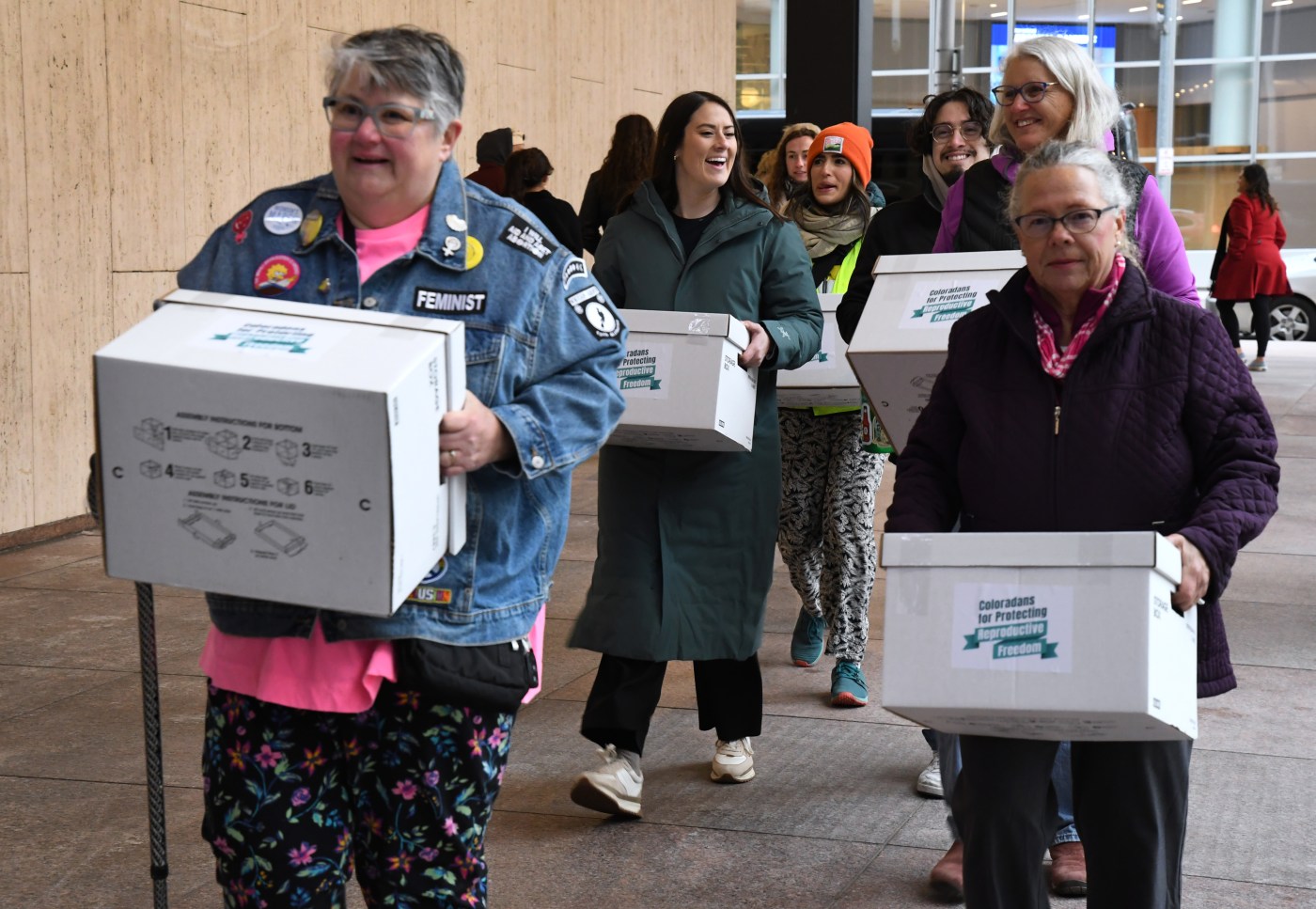
Colorado voters have an opportunity this fall to guarantee reproductive freedom in the state Constitution, and also to finally make certain that this liberty doesn’t just pertain to affluent women with private health insurance. We urge people to vote “yes” on Amendment 79.

This amendment is needed to repeal another constitutional amendment passed by Colorado voters 40 years ago that prohibits taxpayer money, including Medicaid, from being used to pay for abortions. Striking section 50 of article V of the Colorado Constitution would provide equitable health care in this state for the thousands of women on Medicaid. Without insurance coverage, women must find a free clinic or save enough money to obtain a safe abortion in a timely manner.

Colorado clinics have waiting lists for abortion care because this state is pulling women from places across the nation where Republicans have banned abortions. So instead of having an abortion at, say, six weeks gestation performed by her own OBGYN, a woman would be forced to wait two or three more weeks to go to a clinic.

Nothing about that is good for Coloradans, including the blastocyst that is rapidly developing into an embryo and by nine weeks gestation will become a fetus.

We trust women to judge their own personal circumstances and make this decision for themselves. We are resolute that abortions be conducted at the earliest possible moment in gestation. Amendment 79 would make certain that women who choose to have an abortion can do so quickly, with Medicaid coverage, and with their own doctors.

But Amendment 79 is also about protecting Colorado’s status as one of the few remaining safe havens for pregnant women in a post-Roe v. Wade world where 13 states have religiously framed laws banning abortions from the moment an egg is fertilized.

Opponents of Amendment 79 want to make the issue about the regulation of late-term abortions.

Thomas Perille, a doctor with Democrats for Life, told The Denver Post that he fears if Amendment 79 becomes law this state will never be able to regulate abortion clinics, including prohibiting abortions after 20 weeks gestation that are “elective” and providing similar licensing and review processes as other hospital clinics and outpatient surgery centers.

But the language of Amendment 79 would not prohibit all future regulation of abortion. We know that the most basic constitutional rights can and should have reasonable restrictions placed on them. We have freedom of religion until a cult begins harming people. We have the right to bear arms but not machine guns. We have free speech unless it’s a vicious lie that harms someone’s reputation. Even before five conservative Supreme Court justices stripped pregnant women of their constitutional protections, abortion was heavily regulated across much of the nation at all points of gestation.

If Amendment 79 passes, Coloradans will have the right to have an abortion but lawmakers can ensure those abortions are safe and conducted within the medical best practices recommended by the state’s Board of Health.

Perille cites data from 2014 released by an abortion clinic in Boulder that says over the course of five years, only 30% of abortions were prompted by a fetal diagnosis. He’s attempting to scare Coloradans into believing that women and doctors are regularly seeking and performing late-term abortions on perfectly healthy babies.

We know that is not the case.

The study itself is focused on second- and third-trimester abortions, but the reference to 30% of abortions being for a fetal diagnosis is referring to all of the abortions — not just abortions after 12 weeks gestation — at the facility in the five-year period, 1,251 patients, as evidenced by the note that the increase in the percent of abortions done for fetal anomalies “reflected a gradual change in clinic policy to accept patients with more advanced gestation.” Clearly, the more patients served later in pregnancy the higher percent of abortions were performed due to fetal anomalies because the two are closely correlated. Today that clinic does not provide first-term abortions but at the time of the study it did.

Only 1% of abortions are performed after 21 weeks of gestation according to the Kaiser Family Foundation, and there’s no data to show how many of those are performed absent a fetal anomaly or concerns for the mother’s health. Doctors do talk about a small number of abortions later in pregnancy in instances of rape, incest, and sex trafficking.

We know that the No. 1 way to prevent abortions from being needed in the second trimester is to make access to care faster. Fewer Colorado women will need to find a clinic at 12 weeks gestation if their own OBGYN can treat them using Medicaid dollars at nine weeks gestation.

Coloradans have a chance to undo years of harmful public policy and make abortions a part of regular health care. It takes 55% of voters to change the state Constitution, so please, don’t skip over Amendment 79 on the ballots that arrive in mailboxes starting Monday.

Sign up for Sound Off to get a weekly roundup of our columns, editorials and more.

To send a letter to the editor about this article, submit online or check out our guidelines for how to submit by email or mail.

Denver voters can reject two misguided ballot measures and send a strong message to animal welfare advocates that Colorado will not bully our ranchers and hat makers out of business.

Initiated Ordinance 308 would ban new textile fur products like mink fur coats and beaver skin hats from being sold inside city limits and Initiated Ordinance 309 would ban slaughterhouses from operating inside city limits.

Both ordinances were brought forward by animal rights advocates who are part of a nationwide movement to stop the slaughter of all animals across the United States whether it’s for fur coats or food.

We disagree vehemently with the premise behind this movement. Killing animals for food and clothing is not inherently cruel. Although, we’ve seen disturbing evidence across the United States of animal cruelty at chicken, pig, cattle, and sheep farms, ranches and slaughterhouses.

So then the question becomes: Is the only slaughterhouse in Denver – a lamb processing facility called Superior Farms in the Globeville neighborhood – guilty of animal mistreatment?

So far, we have not seen any evidence of mistreatment.

Aidan Kankyoku with Pro-animal Future points to a 2019 undercover investigation done at a Superior Farms lamb slaughterhouse in California as evidence that the Globeville facility is guilty of animal cruelty. The video of the fully grown lambs being slaughtered is hard to watch. The animals thrash after their throats are cut struggling to survive as they bleed to death over the course of several minutes, but that has been the harsh reality of animal slaughter for all of human existence.

Both the California facility and the Colorado facility use high-powered electric stun guns to knock the animals unconscious before their throats are cut. Kankyoku says reports from slaughterhouses across the country show that the stunning is often ineffective and animals suffer needlessly while they bleed to death.

But there is no evidence that the Superior Farms facility in Globeville is guilty of failing to properly stun animals. This facility is not on some “worst offenders” list of slaughterhouses. Shutting down this one slaughterhouse makes no sense unless you agree with the premise that Americans should not be eating meat because killing animals is an unnecessary evil. Killing animals is hard and gruesome but it is a necessary part of the animal food chain.

Americans should demand that the U.S. Department of Agriculture improve and enforce the Humane Methods of Slaughter Act. Kankyoku, who lives in Denver, said animal welfare advocates have been asking for decades for small changes such as unannounced inspections and large changes such as banning high-speed slaughter so workers can take their time and reduce suffering. Nothing has come of their advocacy.

That frustration has spilled over to a ballot measure that would close a facility that likely is treating its animals as humanely as possible given that the goal is to kill the hundreds of animals arriving every day as quickly as possible and to process their skin and meat into useable parts for distribution across the world.

But the facility is also providing good-paying, steady jobs to about 160 people directly and is supporting Colorado ranchers who bring their livestock to the facility from across the state. The facility provides lamb to local restaurants and grocery stores. Colorado lambs getting shipped further away only to get shipped back as meat would be worse for the environment and the economy. Would the treatment of those lambs be better in another facility? Superior Farms developed its process for killing the animals with the consultation of Temple Grandin at Colorado State University, who is a known advocate for animal rights.

Perhaps Superior Farms needs to slow down its animal processing speed, but it certainly doesn’t need to be shut down.

Meanwhile, the fur ban comes on the tail end of a successful social movement that began with civil disobedience in New York in 1985. Today, very few people wear fur, and even fewer buy luxury fur products new. Neiman Marcus stopped selling fur clothing in 2023.

We fear this fur ban in Denver, however, will have no discernable impacts on Louis Vuitton and other couture shops that can simply move outside city limits but will impact people like Coleen Orr. Orr makes cowboy hats from beaver pelts and the products would no longer be able to ship through Denver to her store in Adams County.

Simply put we are not endorsing the fur industry but we also aren’t endorsing the anti-animal husbandry message ingrained in a fur ban.

Please vote no on these two ballot measures to support Colorado’s western roots.

Sign up for Sound Off to get a weekly roundup of our columns, editorials and more.

To send a letter to the editor about this article, submit online or check out our guidelines for how to submit by email or mail.