
Month: July 2025

Following reports from a University of Utah student that she was fed soggy bread and other mush while she was detained for two weeks in a privately run Aurora detention center, U.S. Rep. Jason Crow thought he’d check out conditions at the facility himself with a surprise visit.

Employees for the GEO Group who were working at the facility on Sunday refused to let Crow inspect the facility.

One small problem: A federal law requires Immigration and Customs Enforcement facilities – even those privately owned and operated under contract with ICE – to allow members of Congress to enter the facility for regular, unannounced inspections.

GEO needs to make sure its employees are trained to comply with the law.

And if the company has nothing to hide, complying with the law should be easy.

Crow’s previous political opponent and former ICE official, John Fabbricatore, called the visit to the GEO facility “performative,” after all, it was a weekend, and likely few managers or personnel with ICE would be present to handle the congressman’s request.

We don’t really care whether it was performative or not. The law exists for good reason – these facilities need oversight. Particularly today, when ICE has exponentially increased its detention of noncriminal individuals for immigration violations, leading to young college students getting picked up by immigration officials and detained with hardened criminals. Conditions in these facilities must meet a minimum standard of decency and safety. Conditions will only deteriorate, as they do at all facilities, as ICE officials try to meet untenable goals set by President Donald Trump to detain and deport millions of people from the United States. Overcrowding often results in unsanitary and unsafe conditions both for those detained and those who work in the facilities.

The Denver Post editorial board has long supported securing our borders, and we know that ICE officials do important work keeping our communities safe by apprehending violent criminals and drug dealers who are in the U.S. illegally.

However, even those who have come here to cause us harm deserve to have their human and constitutional rights, which apply to everyone regardless of immigration status, respected. We fear too many people in power have lost sight of this basic American value.

In Florida, reports of conditions at a new facility dubbed Alligator Alcatraz are concerning. The Associated Press reported that those detained suffer worms in their food and wastewater on the floor.

President Donald Trump touted the facility as intentionally being “the worst of the worst” as a way to get people at risk to “self-deport.” Consider for a moment how many hardworking families have come to America seeking asylum in recent years, and now consider that all of them are at risk for detention because of their pending immigration status. ICE has shown zero qualms with detaining first and asking for legal documentation after.

Crow’s diligence on this issue is outstanding. He was just as committed to making sure the GEO facility was operating soundly when President Joe Biden was in office as when Trump started his second term. He is not new to this issue and has been fighting to make sure Coloradans – regardless of their legal status – are treated with decency and respect.

If only all of this great state’s members of Congress could say the same thing.

Crow should return to the GEO facility, unannounced, and try again to see how this private company is treating detained individuals.

Sign up for Sound Off to get a weekly roundup of our columns, editorials and more.

To send a letter to the editor about this article, submit online or check out our guidelines for how to submit by email or mail.
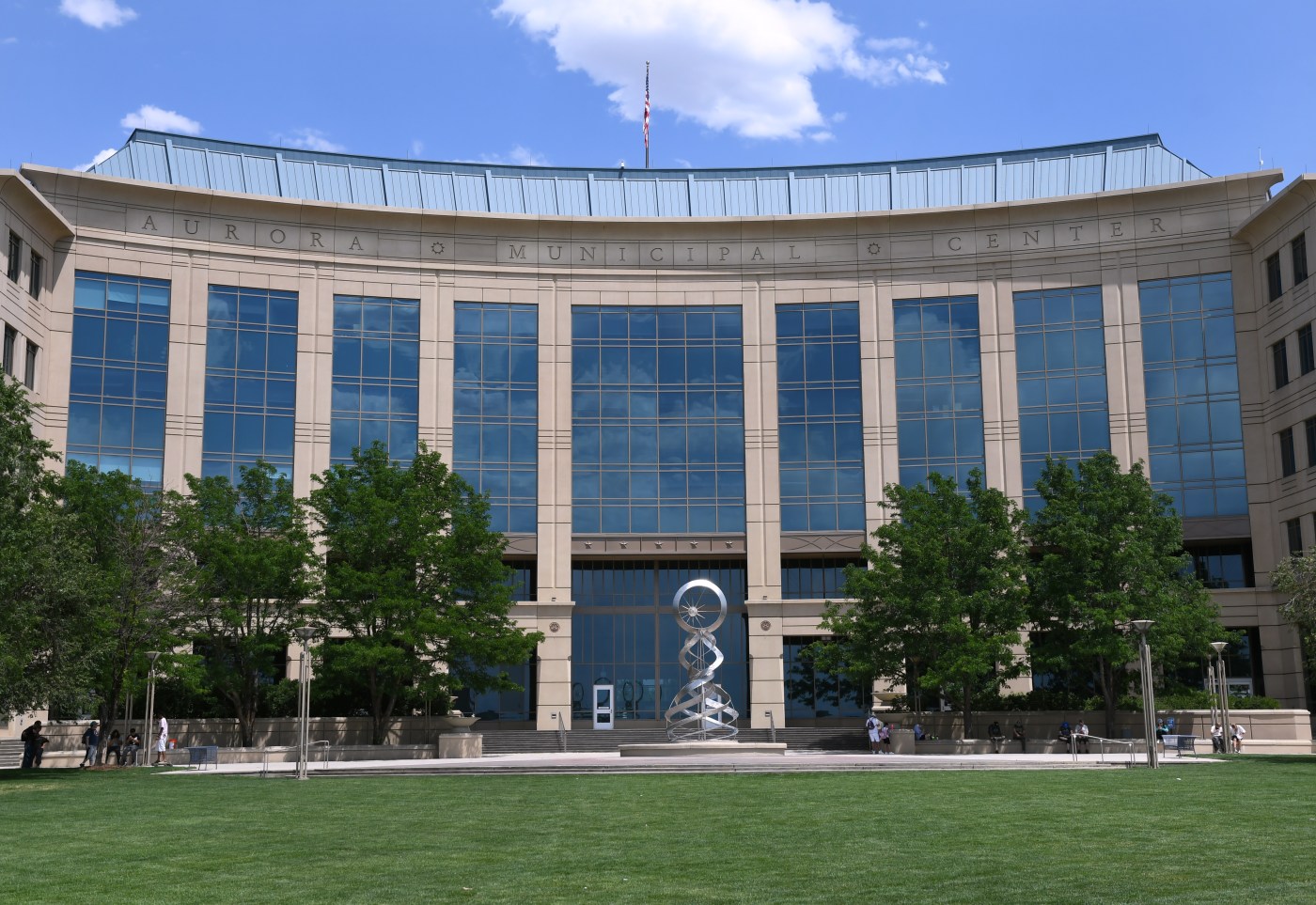
Aurora City Council and Mayor Mike Coffman made the right decision on Monday not to ask voters for pay raises, but the question before them lingers over many growing cities across the state and deserves an honest answer and assessment.

We know that many city council members in Aurora, one of the nation’s 51 largest cities, are working far more than a part-time job representing thousands of constituents across the sprawling municipality. For many Aurora residents who would consider running, the part-time salary of $22,000 makes it impossible to do the job well because holding a second job would be a necessity. Conditions are even worse in Colorado Springs, where city council members still earn what is essentially a $6,250 stipend, and in Greeley, where voters recently rejected a pay raise, keeping the salary at $12,600.

We want public office to be open to everyone, not only to the independently wealthy.

Still, we applaud the Aurora mayor and city council members for rejecting this particular pay package.

Pay raises must be commiserate with work expectations.

Voters in these cities should be asked two questions at the same time: should the job description for their city councils change to full-time with more frequent meetings and more expectations, and should the pay be increased to go along with those new hours?

City Manager Jason Batchelor, who requested the raises for his bosses, is right that the job overseeing one of the nation’s largest cities is no longer part-time, but the City Charter must change first to make the positions full-time before salaries jump from $22,700 to $75,000 for council members.

There are many issues with Aurora’s City Charter – particularly how it handles discipline, hiring and firing in the police department – and we don’t think the city should be afraid of asking voters to amend the document. In an election in 2023, voters approved several fixes to the charter.

We know many city council members work more than just the two public meetings a month, but we are also certain that many do not. The pay increase must be commiserate with an official increase of hours worked. Even elected officials need accountability. If the charter changes and council members are working a full-time job every week then we think an annual salary of $75,000 would help attract qualified and committed candidates without attracting people who are in it for the money.

As for the mayor’s salary, which would have increase from $98,500 to $150,000 annually, we have to agree with Mayor Mike Coffman that it is inappropriate.

Coffman, perhaps one of Colorado’s most honest and forthright politicians, pledged to oppose putting the measure on the ballot unless his salary increase was removed from the proposal.

“Public service is, by itself, supposed to be a sacrifice,” Coffman said.

Amen.

We appreciate the selfless people who step into the limelight to serve their community, often taking on public scrutiny and uncomfortable situations in addition to late-night meetings and campaigning. We agree that making the job full-time will generate more economically diverse candidates who can hold the position without trying to also hold a full-time job, something that today is hard to do with any kind of position that doesn’t have extreme flexibility.

The last thing we want is for public office to only be available to the affluent.

But, in the case of the mayor, we think $98,500 is a full-time salary that a person in Aurora could live on without having to maintain a second job.

We’d also like to point out that in many of these cities, elected officials are already getting cost-of-living increases annually.

People, whether elected or at-will, should be paid for the work they do. These cities are booming, and we no longer think part-time council work is sufficient to meet the needs of the community. Once the roles change, their salary should increase as well. But not before.

Sign up for Sound Off to get a weekly roundup of our columns, editorials and more.

To send a letter to the editor about this article, submit online or check out our guidelines for how to submit by email or mail.

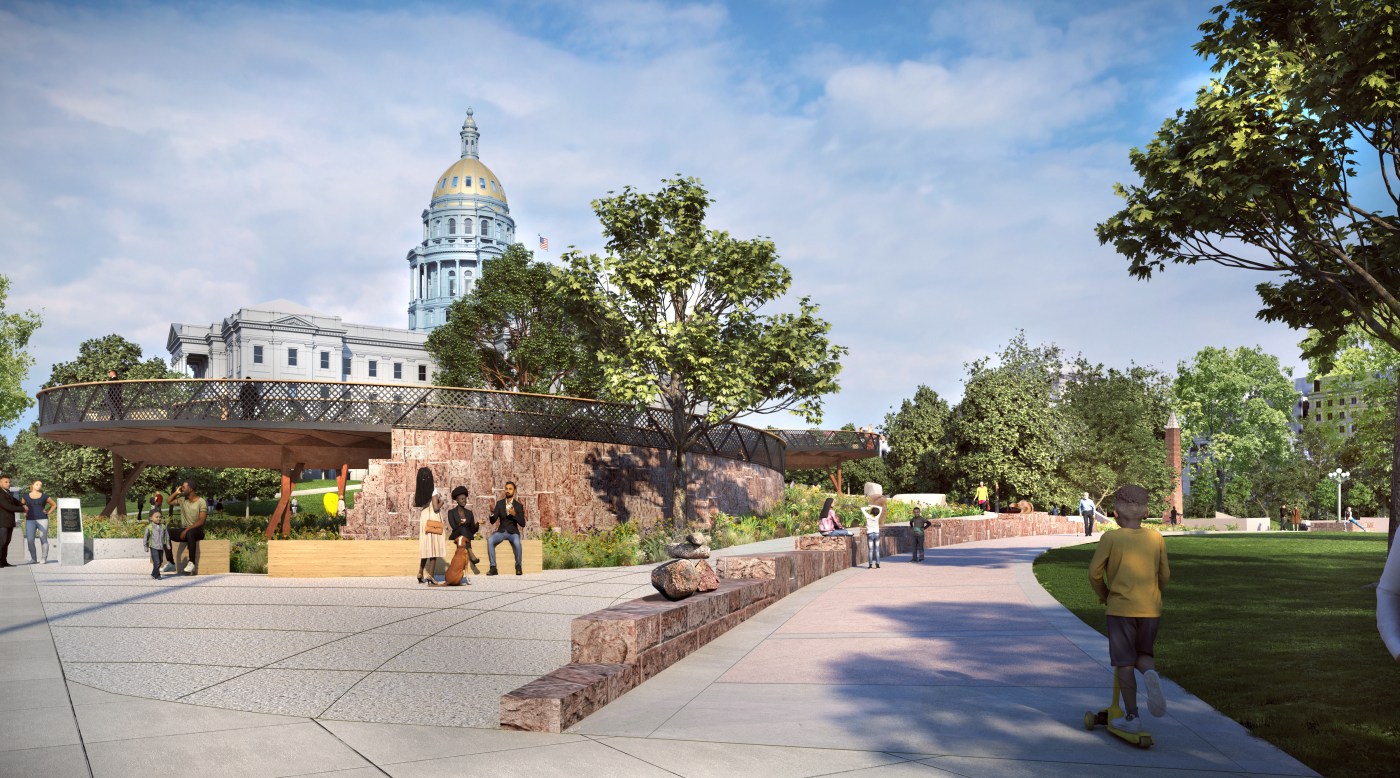
Gov. Jared Polis’s pedestrian bridge is not without merit, nor does it have to be an assault on the historic district, as some critics have claimed. Adding an interesting and functional architectural feature and tourist attraction to a struggling part of the city is a good idea for an entire state that relies on tourist dollars.

The problem with the project, intended to memorialize the state’s 150th birthday, is that it jumps a long list of unaddressed capital improvement projects, and skimps on artistry and historic value. The state has a process for spending its limited dollars maintaining everything from the magnificent Gold Dome to ancillary storage buildings. While it is unclear if the money will come from some other source or not, it is true that all dollars are fungible. Cutting in line for a project only released to the public a few short months ago is very bad form.

We don’t blame the members of the Capital Development Committee for balking at the request for about $10 million toward the $28.5 million price tag.

Rep. Tammy Story, a Democrat who chairs the committee, struck a sound note when she wrote to The Denver Post: “This $29 million ‘art installation’ is financially irresponsible and completely tone-deaf.” Indeed, the state has some financial problems, and our economy is slowing.

But let’s not scrap the Colorado 150 Pedestrian Walkway. Rather, let’s tip the scales of the public/private investment more heavily toward donors.

Asking the committee for a few million dollars that will be used to leverage $20 million or $30 million in private donations is much more palatable than the current 60/40 split that has the state picking up most of the tab.

There is a price to cut in line of a carefully curated and considered list of projects, and the current plan to only raise $11 million for the project is not enough.

We appreciate that this state’s civic leaders are ponying up millions of dollars to invest in art, culture and, yes, pedestrian safety at one of the state’s busiest intersections — Colfax and Lincoln. We’d love to see this bridge completed with Colorado artists getting paid for their work.

The state’s Capitol complex is a true gem. From the steps of the Capitol looking west, visitors see a panoramic view that includes our iconic skyline, art museum, Central Library, Denver’s beautiful city hall and our majestic mountains. Adding an architectural marvel at the ugly intersection will only enhance the view of Lincoln Veterans Memorial Park and Civic Center Park.

Several times a year, these parks are filled with visitors coming for festivals and protests. And while our unhoused neighbors do spend time in the park, gone are the unsanitary and unsafe encampments that for a time after the Black Lives Matter protests and COVID shutdowns took over the area.

Tammy Story is right to question the appropriateness of spending public dollars on something that is nice-to-have while deferred maintenance and other needs go unmet.

And John Deffenbaugh, president and CEO of Historic Denver, is right in his call for the bridge to conform to the design principles of the Denver Civic Center Historic District.

“We welcome change and believe that with sympathetic design and under the right circumstances, preservation and progress go hand in hand,” Deffenbaugh wrote in a scathing letter that picked apart the design of the bridge as an affront to the “formal order, symmetrical balance, and neoclassical expression,” that dominates the district today.

We are shocked that the architectural firm employed for a portion of the $1.5 million already spent on design and planning didn’t take into consideration the district’s design guidelines, which have been in existence since 2009. Given this gross oversight in their performance, we are certain they will redraft plans that will mesh seamlessly with the neoclassic architecture that dominates the park. Imagine a marble bridge spanning from the Capitol to the City and County building in undulating waves like Colorado’s white water rapids.

These are not insurmountable obstacles, but Polis needs private donors and a visionary architect. Time is short before the state celebrates its birthday, and Polis leaves office. We wish him luck.

Sign up for Sound Off to get a weekly roundup of our columns, editorials and more.

To send a letter to the editor about this article, submit online or check out our guidelines for how to submit by email or mail.