
Month: October 2025

Under no circumstances should the City of Denver bail out the bad investments made into risky bonds at the old Gates Rubber Co. redevelopment site.

The land at South Broadway and Interstate 25 could soon become a soccer stadium for Denver’s new women’s team, but those plans could leave investors who banked on getting repaid by property tax revenue high and dry because the city will buy the land from the former developer, rendering property taxes on a big chunk of the land zero.

Joe Landen, the managing director of a Denver-based investment firm, said in an interview with BusinessDen reporter Justin Wingerter, that it will “be remembered” if the city allows the bond investments to fail at the old Gates site, which is formally known as the Broadway Station Metropolitan District. We can only hope so.

Landen tried to equate the investment his firm made into the project to investments in municipal bonds. The difference between the two is laughable. The municipal bonds Denver will sell if voters approve a billion-dollar bond issue in Tuesday’s election are backed by the city, a major metropolitan city already fully developed and rated AAA quality by all three major bond rating agencies.

The bonds Landen’s firm invested in were issued by a developer who was given taxing authority through a metropolitan district and the promise of lucrative tax breaks through the city’s redevelopment authority. The bet investors made was not on whether Denver would succeed, but on whether the developer controlling the quasi-governmental authority, the bond money and the tax rates was trustworthy. In the case of the Gates Factory, the plans for redevelopment failed spectacularly, but not before the developer spent millions of dollars from investors on infrastructure and remediation.

Our response to Landen’s plea now for a bailout from the City of Denver is simple — absolutely not.

Metropolitan district bonds are extremely risky, and the investors in the Broadway Station metropolitan district should be used to set an example for the entire state. These bonds are nowhere close to the secure investment of city bonds, and investors should be very wary of entering into these deals with developers.

So yes, Landen, we hope you and other investors have a very long memory and that you tell all your friends in the bond market industry the risks of investing in metro districts. Perhaps the drying up of the bond market will be enough to save future taxpayers from the rampant abuse at the hands of many developers.

We can think of several housing projects going on right now in the metro area that could teeter and fail with an economic downturn and a housing crisis — including Sterling Ranch and Aurora Highlands. The bondholders whom developers convinced to invest in their property taxation scheme will be the ones left on the hook, instead of the developer, who can walk away from the project with very little personal investment in the infrastructure.

We’ve wondered for years how long it would take for investors to realize that these bonds are not safe-secure municipal bonds guaranteed by city officials. Mayor Mike Johnston has an opportunity here to let the harsh reality of developer-granted taxing authority hit investors hard in the face, and he shouldn’t hesitate to take it.

Colorado’s local elected officials have, for decades, ignored warnings that giving developers unlimited taxation authority and allowing them to market their bonds as tax-assured investments similar to a municipal bond is a looming financial disaster on par with the Big Short of 2008. Instead, elected officials have handed taxing authority to every developer who asks, with few restrictions or protections for investors or future taxpayers. Denver is preparing to do it again with the Denver Broncos stadium redevelopment plan for Burnham Yard.

Now, it appears the only solution to the problem is for investors to stop putting their money in these schemes because they fear a default on the bonds.

We applaud Mayor Mike Johnston for refusing to bail out the developer of the old Gates Rubber Factory and the investors who treated a risky project led by a developer like a safe municipal bond.

We tried but couldn’t muster much sympathy for Landen and the others who knowingly gambled on the Gates Rubber Factory redevelopment, putting their faith in metropolitan districts.

Sign up for Sound Off to get a weekly roundup of our columns, editorials and more.

To send a letter to the editor about this article, submit online or check out our guidelines for how to submit by email or mail.
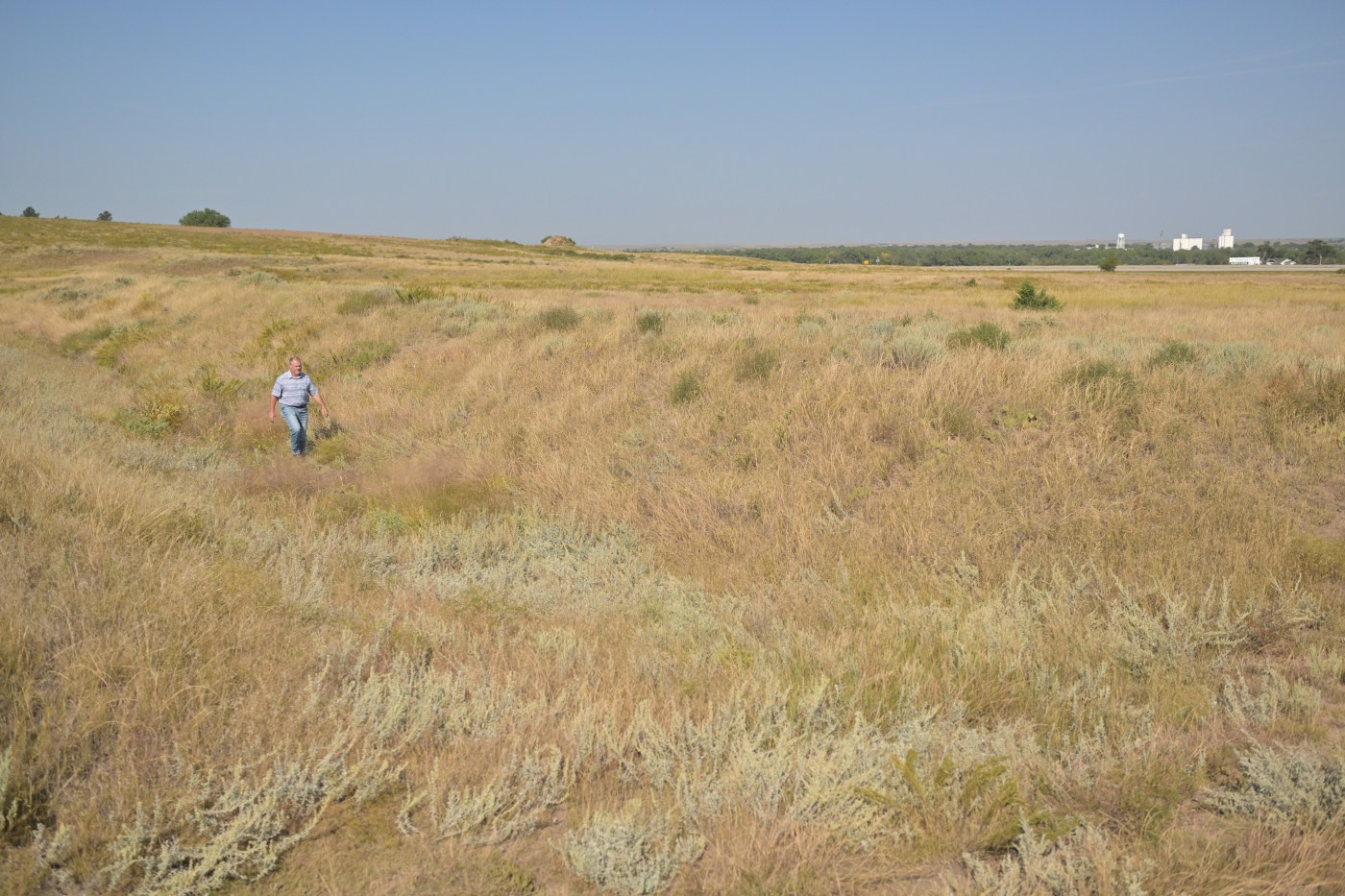

Nebraska understandably wants to finally tap into a water right it has held on the South Platte River for almost a century.

Coloradans understandably are worried the plan will cut into the amount of water they can pull during the winter to save up for their crops in the spring.

Now the matter will go to the U.S. Supreme Court to decide whether Colorado officials have violated the long-standing water-sharing compact for the South Platte River or whether Nebraska’s complaint is much ado about hoping to evade actually having to construct a billion-dollar canal to claim their water.

Fortunately, the 1923 South Platte River compact is abundantly clear and written in language that is difficult to interpret any other way. And also, fortunately, farmers relying on the South Platte River were not born yesterday.

Nebraska can build a canal that begins south of Ovid and travels east through Colorado to Perkins County to pull water during the winter months — roughly October to April — to store water to be used by Nebraska farmers during the spring growing season.

The canal — after taking into consideration upstream and downstream senior water rights — can take 500 cubic feet of water per second from the flow of the lower section of the South Platte during the winter.

So, Nebraska is entitled to the water, clearly, but only if it builds a canal.

And that is, of course, the rub.

Building a canal is going to be expensive. Nebraska lawmakers appropriated $628 million to get the project started.

But the state found landowners in Colorado unwilling to sell. An obvious development given that the canal could limit how much water the very farmers who own the land could pull from the river during the winter to store for spring.

Would you sell cheap?

Nebraska is expressly guaranteed the right to use eminent domain — the government’s power to take land against the owner’s will — to purchase land or egress for the canal. But the problem is land in Colorado is not cheap, and Colorado law demands that when eminent domain is used, a person is not only compensated for fair market value but also gets damages for the taking.

For example, a new interstate running next to a house is going to dramatically devalue that property. Colorado law requires a city or state to compensate the individual for the property taken, but also for the damages to their house. Could landowners convince a court that the taking of their land for a canal also included the taking of water from the river that they otherwise could use for crops? Maybe.

Notifying Colorado landowners of their rights and helping them organize to protect their own interests is most certainly not interfering unlawfully with Nebraska’s plan. Nebraska’s attorney general included this quote from Colorado Attorney General Phil Weiser:

“We don’t believe there’s ever been a case in American history where one state has sought to exercise the power of eminent domain in another state. That is going to raise some significant legal issues. We are preparing for them. We’re prepared to engage on the ground to let people know what rights they have.”

That quote only proves that Weiser is doing his job protecting Coloradans and informing them of their legal rights.

Nebraska may need to bring a lot more money to the project than was originally proposed, but that is not Colorado’s fault.

As for the other claim in Nebraska’s lawsuit, that Colorado has routinely been violating the compact by not sending enough water downriver during the irrigation system, we are skeptical. The initial claim from Nebraska was scant on details about how much water is being shorted to Nebraska users.

Colorado’s response, filed this week by Gov. Jared Polis and Attorney General Phil Weiser, makes it abundantly clear that the state takes meeting the compact’s obligations seriously.

“Nebraska itself has not concluded whether Colorado is impermissibly reducing flows during the irrigation season, and there are other forums to explore Nebraska’s speculation on the efficacy of Colorado’s augmentation plans,” the state’s Supreme Court brief reads.

That is, if Colorado’s plan to offset or “augment” the negative impacts of pervasive groundwater pumping along the South Platte River is failing to deliver the required water downstream, the state is happy to address it, but first, Nebraska must bring evidence and bring it to the water managers in charge of enforcing the state’s prior appropriations system.

Sign up for Sound Off to get a weekly roundup of our columns, editorials and more.

To send a letter to the editor about this article, submit online or check out our guidelines for how to submit by email or mail.
Matthew Silverstone, at the young age of 18, has sacrificed more for Colorado than most can imagine.

The teen first warned his fellow students at Evergreen High School that there was a shooter on campus, then he confronted the shooter on the street outside the high school. Silverstone was shot twice.

He spent a month in a Lakewood hospital fighting for his life and then recovering from the wounds that almost killed him. He was released from the hospital Tuesday in what his family called a miracle, and we call a blessing.

“Matthew has never given up. He can now speak. In fact, he is happy to tell you, ‘I’m still alive!’ He can walk with assistance,” his family said in a news release. “His friends will tell you his sense of humor is back. He has exceeded everyone’s expectations in his recovery.”

Silverstone was both brave and selfless on Sept. 10, and it sounds like he continues to shine through his recovery, giving everyone hope in these dark times.

Silverstone is not alone in his distinction as a true Colorado hero.

Another student who was shot at Evergreen High School last month confronted the shooter. At the age of 14, the victim’s family has understandably chosen to remain anonymous and keep out of the public eye. We wish to respect their privacy while also highlighting the incredible act.

Both students remind us of Kendrick Castillo, who was killed defending his classmates inside a Highlands Ranch school in 2019. Castillo was joined by other classmates — Brendan Bialy and Joshua Jones — as they lunged at a shooter, saving others. Bialy was not hurt, but Jones was shot twice.

We are torn between celebrating these incredible acts and crying for the state of our country. Mass shootings have been occurring in Colorado schools since the 1999 Columbine High School massacre. How is it that students are still the ones confronting these assailants and not our trained adult professionals in law enforcement? Every school in this state needs an armed officer on campus at all times.

We should not be asking our kids to save themselves. More must be done to protect students who attend school hoping to grow and learn, and far too often in the past decade have found themselves trying to survive the horrors of mass shootings and the trauma that follows.

Nine minutes passed between when the shooting began inside Evergreen High School and when Silverstone was shot at the corner of Buffalo Park Road and Olive Road at the far end of the high school’s campus. Having an officer on the campus could have resulted in a different outcome.

Expressing gratitude to these kids for their acts of heroism is not enough. We can name a street for Silverstone (and should, just as we created Castillo Way). We can cry for their pain and suffering, and rejoice at their perseverance and determination.

But adults in Colorado must now act to ensure that no other child in this state is forced to fight an armed assailant for their lives and the lives of their friends and teachers.

Sign up for Sound Off to get a weekly roundup of our columns, editorials and more.

To send a letter to the editor about this article, submit online or check out our guidelines for how to submit by email or mail.

Updated 2:10 p.m. Oct. 17, 2025: Due to an editor’s error, this article previously misreported details about the shooting of Matthew Silverstone. 

Arizona and California’s chief water negotiators are coming for Colorado in a blistering public pressure campaign aimed at getting upper basin states to capitulate.

In an interview with the L.A. Times, the negotiator for California accused the upper basin states of Wyoming, Colorado, Utah and New Mexico of clinging to “their most aggressive and rigid dreamland legal positions.”

In an op-ed for The Denver Post, Arizona’s negotiator suggested failing to come to the table with cuts could “let slip the dogs of war.”

This over-the-top hyperbole from both men illustrates just how poorly conversations to save the Colorado River are going behind closed doors. The federal government has given the seven states that rely on the Colorado River a deadline of Nov. 11 to commit to a general compromise on water use. Obviously, a consensus agreement would be far better than the Trump administration’s Department of Natural Resources implementing its own plan.

But when it comes to protecting Colorado’s interests, we will fire back with our own hyperbole — almost everyone is hurting from water restrictions during what has been deemed a “mega drought.” California and Arizona are overdue to share in that pain.

“When you see years that are like 2020 to 2021 where (Colorado) took an over 1 million acre foot reduction, that’s not a compensated reduction. No one delivered a check and kudos,” Rebecca Mitchell, Colorado River Commissioner and our state’s negotiator, told The Denver Post editorial board in an interview this week. “We did them because Mother Nature demanded them … Part of the issue is that no shortages were taken in the lower basin until 2022; meanwhile, during the period of these guidelines, we take shortages all the time.”

Some things are non-negotiable as the states work to divvy up the water that flows down the Colorado River every year. For example, Native American tribes should face smaller cuts than other users. The U.S. government forced indigenous peoples onto often inhospitable tracts of land, and now we must make good on promised water rights and water delivery. Tribal nations must be protected. In Arizona, almost half of the water flowing through the Central Arizona Project canal goes to Native American Tribes, meaning that Phoenix and its suburbs are going to face the lion’s share of the state’s cuts.

The other non-negotiable is that Colorado will not further curtail its use of the Colorado River without major concessions from California and Arizona.

Colorado’s water use is based on a prior appropriations system, which means that every year, some junior water rights holders do not get their full allotment because there isn’t enough snowpack. Lower basin states, meanwhile, have failed to adjust their use to compensate for the drought, draining the reserves in Lake Powell and Lake Mead. The upper basin states use less water than what is allotted to them in the compact, while the lower basin states use more.

We fear that for too long, water managers up and down the river have been reluctant to implement the extreme measures needed. Because the harsh truth is that municipalities can only do so much. The vast majority of the water drawn from the Colorado River goes to agriculture and commercial interests, especially golf courses, industrial and data centers, oil and gas operations, and the Imperial Valley in California. These users are the ones who will be hit the hardest by coming reductions.

Denver Water users (who get most of their drinking water from snow melt that otherwise would flow into the Colorado River) have curtailed our use by 36% since 2000 despite a boom in population growth. Today, Denver Water users consume an average of 119 gallons per capita per day. Southern California’s Metropolitan Water District customers, which serves Los Angeles, use an average of 114 gallons per capita per day.

In Phoenix, residential users consume about 92 gallons per capita per day. In Las Vegas, the water use is 89 gallons per person per day, and a substantial amount of the city’s water is recycled, meaning it doesn’t come from the Colorado River.

While LA and Denver receive similar amounts of rainfall every year, Phoenix and Las Vegas are two of the driest cities in the country. If they can reduce their use so low, so can every other city in this nation.

Construction continues at a community surrounding a large beach like pool called Desert Color in St. George, Utah, on April 15, 2023. The U.S. Geological Survey shows that residents of Washington County, where St. George is located, use an average of 306 gallons of water each day. In contrast, Phoenix residents use 111 gallons per day. (Photo by RJ Sangosti/The Denver Post)
Construction continues at a community surrounding a large beach-like pool called Desert Color in St. George, Utah, on April 15, 2023. (Photo by RJ Sangosti/The Denver Post)

Deserts like Phoenix and St. George, where less than an inch of rain falls every year and the high temperatures in summer often top 110 degrees, may have to follow Las Vegas and put a moratorium on golf courses unless they find a sustainable water alternative. And no, groundwater is not sustainable.

Farmers in the Imperial Valley, who faced cuts beginning in 2020 that led to some fields being left fallow, will have to reconsider their crops, invest in water-saving irrigation systems, and possibly reduce their yield. Everyone will pay for these changes at the grocery store, whether it is the increased price of meat as the price of alfalfa hay skyrockets, or the increased price of water-hungry produce like almonds and pistachios.

A compromise between states rather than a unilateral decision by the Department of the Interior, followed by a protracted legal battle, will reduce how drastic cuts are. Using less water today could start the recharge of Lake Mead and Lake Powell, both of which are nearing dead pool status and are around 30% full.

Coloradans have always been ready to do our part to save the river, but we will not further cut our use to support reckless downstream users.

Everyone can pull together — municipalities preventing unsustainable growth and development, aesthetic or non-functional turf grass must be strictly limited and our agricultural communities must be supported as they transition to water efficient irrigation systems and less water-intensive crops.

This is an emergency, and Colorado’s water negotiators are right to stand firm defending Colorado.

Sign up for Sound Off to get a weekly roundup of our columns, editorials and more.

To send a letter to the editor about this article, submit online or check out our guidelines for how to submit by email or mail.
Regardless of the ethics board’s “technical” conclusion this week, Denver residents know that it is unethical for a public employee to spend $19,200 on a ticket to Spain and back to Denver even if it is for an important work-related conference.

Denver International Airport’s CEO Phil Washington was wrong to allow himself and eight other executives to fly to Madrid in first-class and business class seats that cost an average of $12,000 per person. The final cost of the travel was $108,989, enough to hire another mid-level employee to help run one of the world’s busiest airports.

We found first-class tickets directly to Spain in April of this year for around $7,000. Yes, ticket prices fluctuate, but if prices are at a record peak, the not-too-difficult decision must be made to fly coach, or to add in a layover, or to skip this year’s annual conference. We would expect our leaders at DIA to at least know how to book travel at a reasonable price.

When does expensive travel cross over from a bad business decision to an ethical lapse?

For example, it is not unethical for the owner of a private and prosperous company to spend $15,000 from the business coffers to book “The Residence” on Etihad Airlines.

If a business, however, is about to declare bankruptcy and owes debts that need to be paid, it would be highly unethical for the CEO to pay the roughly $8,700 to fly La Première, what is described as a “private suite” on Air France from Denver to Paris this month, using what essentially is other people’s money at that point.

And for employees of a public entity – like the Denver International Airport – there is a higher standard, an expectation of frugality.

Denver airport officials’ salaries are paid for by fees and taxes on airlines, which are passed directly or indirectly on to the ticket prices for passengers. The more efficient operations at DIA are, the lower the fees on airlines are, and the savings, in theory, will get passed on to users. The end goal for employees at DIA is to serve the traveling public. They are not trying to make a profit so much as raise only the money necessary to serve the public effectively and efficiently. Every dollar misspent on luxury travel accommodations is a dollar that could remain with an airline or with a passenger. These dollars are not fungible.

CBS Colorado reporter Brian Maass did good work tracking down the public records that showed the cost of these flights, and we are glad someone reported the expenses directly to Denver’s Ethics Commission for review.

But we don’t want the decision that the lavish spending did not violate the city’s ethics policy to muddy the waters.

This behavior is not acceptable for our public officials.

We understand that travel is a business perk often used to entice high-level employees to a company, like the chief operating officer who took the most expensive flight on this trip to Madrid for the Annual Passenger Terminal Expo. But there has got to be a limit on the perk, and clearly the city’s travel policy – that costs be “reasonable” – is not strong enough. It is apparent to all Coloradans that an almost $20,000 flight is not reasonable. In fact, we would call that price – prohibitive. The answer should have been “no” to those flights and the city’s policy can be updated so that if the price of travel is astronomically high, either alternatives are sought or the trip is canceled.

While the Denver Ethics Commission adhered to the letter of the ethics policy, we do not want Denver officials – even those in externally funded enterprise ventures – to believe these flights were acceptable expenditures. Clearly, officials at Denver International Airport need to have a cap applied to their travel expenses, and we are guessing officials in other cities and counties in Colorado would benefit from this warning as well. Be prudent with our dollars, or expect dogged journalists such as Maass to expose your lavish travel.

Sign up for Sound Off to get a weekly roundup of our columns, editorials and more.

To send a letter to the editor about this article, submit online or check out our guidelines for how to submit by email or mail.

Archbishop Samuel J. Aquila has an incredible opportunity to recommit to serving all of God’s children in the Catholic schools under the umbrella of the Archdiocese of Denver.

On Oct. 1, a federal appeals court told two Catholic preschools in the Denver diocese that they could not refuse to enroll students because of the students’ sexuality or the sexuality of their parents and still receive state funding.

The ruling is in accordance with long-standing practices – churches can either accept state and federal funding for their education programs or they can discriminate based on sexual orientation, race, disability, military status, gender identity or religion. Private schools cannot do both.

Aquila can choose to appeal the ruling, or he could choose to pull Catholic schools from Colorado’s highly successful universal free preschool program.

But the gracious and kind path forward is to begin enrolling any and every student who seeks admission to a Catholic preschool until the school reaches capacity.

We’d like to remind Aquila and the leaders of St. Mary Catholic Virtue School in Littleton and Wellspring Catholic Academy in Lakewood that every student has a right to an education in this state, and if state dollars are being used in a program, it must be open to everyone. We’d also like to remind them that the love that happens in a student’s home has no impact on other members of the church or other students in the classroom.

In the rare event that a preschool student is already expressing their sexuality or their gender identity in public, those topics rarely, if ever, come up in a preschool setting. If they do, adult teachers are adept at redirecting the conversation to something that is more age-appropriate. Or if the teachers feel compelled to express their religious beliefs on the issue, they are free to do so in a private school, and the parents can then decide if that is the right environment for their child.

We do not buy the accusation in the lawsuit that the universal preschool program is an attack on religious education. In fact, the beauty of the universal preschool program is that it includes religious schools, opening the doors of some of the best schools in the state to low-income and middle-class Coloradans who couldn’t otherwise afford tuition.

We are grateful that Catholic schools want to participate in the state-funded program that covers tuition for a limited number of hours per student. The state will be better for having these excellent schools open to everyone, and we know that some private preschools have chosen not to participate in a program that can be complicated and messy, especially in the chaotic first year of implementation.

In their ruling, the federal judges on the 10th Circuit Court of Appeals found that Colorado’s program “went to great effort to be welcoming and inclusive of faith-based preschools’ participation.”

Colorado’s preschool program does not prohibit schools from teaching religion in their classrooms, which could mean a teacher telling a student that the teacher believes their parents are living a life out of accordance with the teachings in the Bible.

The state learned an important lesson after losing an anti-discrimination case before the U.S. Supreme Court because the justices found evidence that a Christian man had faced hostility based on his religion. Colorado cannot be so zealous in its effort to prevent discrimination that it also discriminates based on religion. A balance must be met, and the universal preschool program has found that balance.

Study after study has shown that American children benefit extraordinarily from quality preschool. Unfortunately, very few states have included pre-school funding in their public schools. Colorado’s universal preschool system, funded by a tax on nicotine products, is groundbreaking and should help our students compete on an international level. Universal free preschool is also essential to help end the stubborn gap in learning that exists between rich and poor students in America.

Catholic schools in this state can step up in an important way to love and educate all children.

Sign up for Sound Off to get a weekly roundup of our columns, editorials and more.

To send a letter to the editor about this article, submit online or check out our guidelines for how to submit by email or mail.

Preschoolers with LGBTQ parents or who identify as LGBTQ can’t be shut out of religious preschools that are part of Colorado’s state-funded preschool program, a federal appeals court ruled Tuesday.

The decision, which upholds a key part of a lower court decision, represents a major win for the state and a defeat for the two Denver-area Catholic preschools at the center of the case.

Tuesday’s decision provides the latest answer to a question being asked in several cases percolating in state and federal courts: Can private religious schools that accept public education dollars refuse to enroll certain kids based on religious principles?

Along with the 10th U.S. Circuit Court of Appeals, a Maine federal district court and a Utah state court are among those who have said no.

It’s possible the U.S. Supreme Court could eventually weigh in, though it’s not clear which case will advance to the high court.

In its 54-page ruling, the 10th Circuit Court of Appeals wrote that it found no proof that the Colorado Department of Early Childhood took actions that “evidence religious hostility” as the two Catholic preschools claimed.

The state’s universal preschool program “went to great effort to be welcoming and inclusive of faith-based preschools’ participation,” the decision said.

The three-judge panel also found that the early childhood department, which runs the preschool program, had applied the state’s nondiscrimination policy in a neutral way to both religious and non-religious preschools.

The policy bars preschools in the universal preschool program from discriminating based on a variety of factors, including sexual orientation and gender identity. State officials cited the policy in denying the Catholic preschools a waiver that would have allowed them to keep LGBTQ children or children from LGBTQ families from enrolling if the preschools had joined the state-funded preschool program.

In a statement Tuesday, Gov. Jared Polis said, “We are building a Colorado for all, where every student is free from discrimination and this voter-approved initiative continues to enroll approximately 70% of all eligible four-year-olds each school year and many faith based and secular providers are operating terrific preschools that serve parents and children well.”

Tuesday’s ruling essentially upholds the status quo in the universal preschool program, meaning that participating preschools can’t shut out LGBTQ children or children with LGBTQ parents.

The three appeals court judges who ruled Tuesday were Gregory Phillips, Veronica Rossman, and Richard Federico. Phillips was appointed by President Barack Obama, and Rossman and Federico were appointed by President Joe Biden.

Nick Reaves, senior counsel at The Becket Fund for Religious Liberty, which is representing the Catholic preschools in the case, sent Chalkbeat a short statement about the ruling.

“Colorado is punishing religious schools and the families they serve for following their faith. The Tenth Circuit’s decision allows the state’s anti-religious gamesmanship to continue. We will keep fighting to ensure that every preschooler in Colorado can access quality, affordable education.”

Conflict arose as state preschool program rolled out

The Colorado case began in 2023 as the state was launching its new universal preschool program, which provides tuition-free preschool to 4-year-olds statewide. The $349 million program serves more than 40,000 children and allows families to choose from public, private, or religious preschools.

Of more than 2,000 preschools participating in the program this year, about 40 are religious.

St. Mary Catholic Virtue School in Littleton and Wellspring Catholic Academy in Lakewood wanted to join the program when it started, but didn’t want to admit LGBTQ children or children from LGBTQ families.

They asked for an exemption from state rules banning discrimination based on sexual orientation and gender identity, but the Colorado Department of Early Childhood refused. The two preschools never joined the program, and in August 2023, the parishes that ran the preschools sued the state. (Wellspring Catholic Academy closed in December 2024.)

In June 2024, a federal district court judge appointed by President Jimmy Carter largely ruled in the state’s favor.

He wrote of Colorado’s non-discrimination rules: “The purpose of the requirement is not to invade religious freedom but to further the implementation of a strongly embraced public value.”

The parishes quickly appealed.

Unfolding alongside the Catholic preschool case is a separate lawsuit over universal preschool brought by an evangelical Christian preschool in southern Colorado. Unlike the Catholic preschools, that school, Darren Patterson Christian Academy, joined the universal preschool program when it launched.

While officials there never sought to keep LGBTQ children or families out, their lawsuit said state non-discrimination rules could force the preschool to hire employees who don’t share its faith or to change school policies related to restrooms, pronouns, and dress codes.

In February, a federal judge appointed by Donald Trump ruled in favor of Darren Patterson Christian Academy.

The state appealed the ruling in May. The case is ongoing.

This story was originally published by Chalkbeat Colorado, a nonprofit news organization covering education issues. For more, visit chalkbeat.org/co.

Get more Colorado news by signing up for The Denver Post’s Mile High Roundup email newsletter.